+86-15205122223 /+86-15950509258
- All
- Product Name
- Product Keyword
- Product Model
- Product Summary
- Product Description
- Multi Field Search


Views: 0 Author: Site Editor Publish Time: 2026-01-15 Origin: Site


When it comes to storing volatile liquids, Internal Floating Roofs (IFRs) play a pivotal role in minimizing evaporative losses and controlling harmful emissions. These roofs, commonly used in industries such as oil, gas, chemicals, and petrochemicals, are designed to float on the surface of stored liquids and help reduce exposure to the air. At Lianyungang Bona Bangwei Petrochemical Equipment Co., Ltd. (BNBW), we specialize in manufacturing high-quality Internal Floating Roofs tailored to meet the needs of various industries. This article compares two popular IFR designs: Pontoon Internal Floating Roof and Full Contact Internal Floating Roof, helping you understand which design is best suited for your storage tank based on performance, installation complexity, and regulatory needs.
An Internal Floating Roof is a specialized component used in storage tanks to float directly on the liquid surface, creating a barrier between the stored liquid and the atmosphere. This design reduces the evaporative losses of volatile liquids and prevents the formation of hazardous vapors, which are not only dangerous but also subject to regulatory control.
The structure of an Internal Floating Roof is typically made up of pontoons or rigid plates, depending on whether you opt for a pontoon-type or full contact design. In the pontoon design, the roof floats on the liquid surface with the help of buoyant pontoons, while the full contact design rests directly on the liquid to provide better vapor suppression. The core purpose of an Internal Floating Roof is to protect both the environment and the stored product by maintaining a tight seal and minimizing air exposure, which prevents contamination of the liquid and reduces harmful emissions.
Key Components of an IFR:
Roof Structure: Made from durable materials like aluminum or stainless steel to ensure longevity and corrosion resistance.
Seals: To prevent vapor from escaping and to ensure a proper seal between the roof and the tank.
Buoyancy Mechanisms: Pontoon IFRs use buoyant pontoons to float on the liquid surface, while full contact IFRs rely on direct contact with the liquid.
The role of an Internal Floating Roof is not just confined to emission control but also plays a key role in maintaining the quality of the stored product by limiting the exposure to oxygen and environmental contaminants.
A Pontoon Internal Floating Roof is equipped with pontoons that provide the necessary buoyancy to float on the liquid surface. These pontoons adjust their position according to fluctuations in the liquid level, allowing the roof to maintain a constant seal and reduce vapor exposure. The pontoons are typically made of lightweight, durable materials such as aluminum or stainless steel to ensure long-term performance and resistance to corrosion.
One of the key features of a Pontoon IFR is the vapor space it creates between the roof and the stored liquid. This vapor space serves as a buffer between the tank’s liquid contents and the atmosphere. While this vapor space reduces the risk of vapor emissions, it still leaves some space for volatile chemicals to evaporate, depending on the liquid's volatility. This feature, while beneficial in certain storage scenarios, is not ideal for applications that require the strictest emission controls.
Typical Applications:
Storage tanks for crude oil, where moderate vapor reduction is sufficient.
Petrochemical storage, where cost-effective solutions are needed, and emission regulations are less stringent.
Cost-effective: Due to its simpler design and moderate installation requirements, a Pontoon IFR is more affordable compared to other roof designs.
Moderate vapor reduction: While it doesn’t provide the highest level of vapor suppression, it does help reduce evaporative loss, making it suitable for many industries.
Simple installation: The structure is easy to install and maintain, which is ideal for tanks with regular operational cycles.
Vapor space: The space between the roof and the liquid may allow for some degree of vapor emissions.
Less effective for high-risk storage: For highly volatile or hazardous liquids, the Pontoon IFR may not meet the stringent emission standards required by some industries.
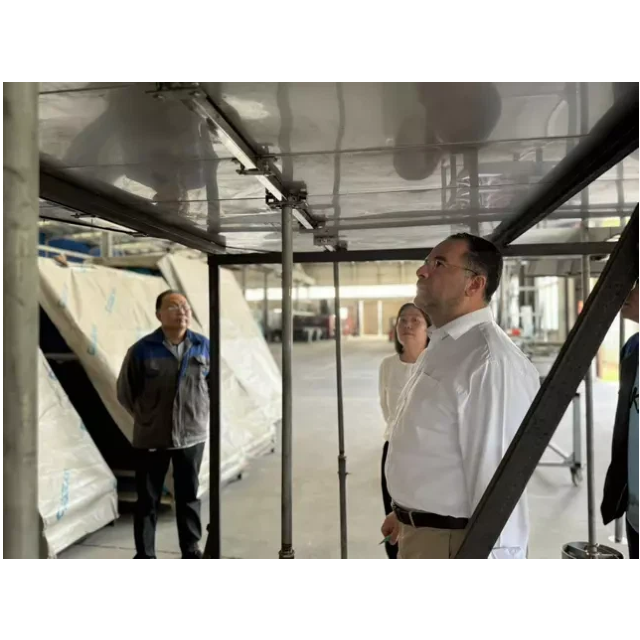
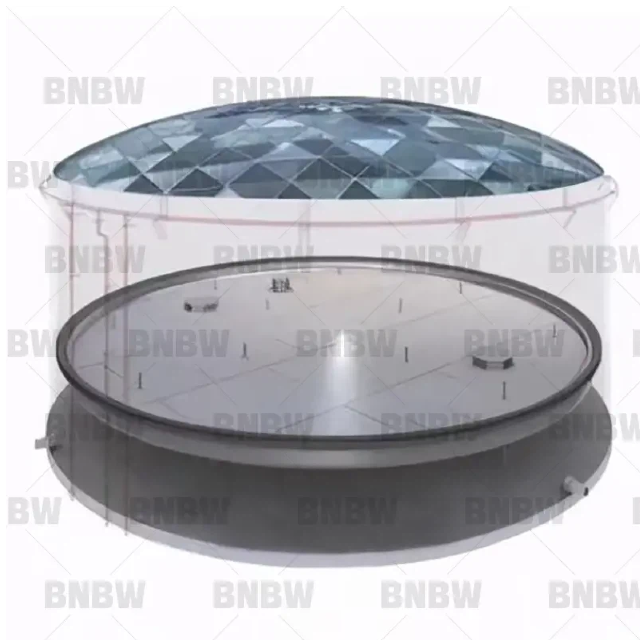
A Full Contact Internal Floating Roof works by resting directly on the liquid surface. This design eliminates the vapor space, which leads to superior vapor suppression. The Full Contact IFR provides an excellent seal between the liquid and the atmosphere, minimizing the escape of volatile compounds into the air.
This type of IFR is designed for applications that require maximum emission reduction and are subject to strict environmental regulations. The Full Contact IFR is built for high-risk liquid storage, where vapor suppression is critical, and every effort must be made to contain fumes and prevent environmental contamination.
In a Full Contact IFR, the roof is typically made from rigid materials that provide full coverage of the tank's contents. Aluminum and stainless steel are the most common materials used, ensuring durability, resistance to corrosion, and a tight seal.
Typical Applications:
Tanks storing chemicals with low flash points.
Petrochemical storage where emissions are strictly regulated and must be controlled at all costs.
Maximum vapor suppression: By eliminating vapor space, the Full Contact IFR ensures that minimal volatile compounds escape into the atmosphere.
Improved emission control: This type of roof is ideal for high-risk liquids that require the most stringent emission reduction measures.
High compliance with environmental regulations: Ensures adherence to even the most stringent industry standards.
Higher cost: The installation and maintenance of a Full Contact IFR are more expensive than the Pontoon IFR due to the rigid structure and advanced sealing mechanisms.
Complex installation: More intricate than the Pontoon IFR, requiring more time and effort for setup.
Feature | Pontoon IFR | Full Contact IFR |
Vapor Space | Has vapor space | Minimal/Zero vapor space |
Emission Reduction | Moderate | Maximum |
Installation Complexity | Moderate | Higher |
Cost | Lower | Higher |
Best Use Cases | General storage tanks | High regulatory standard situations |
Selecting the right Internal Floating Roof involves assessing several key factors:
If you are storing highly volatile liquids, such as crude oil or flammable chemicals, a Full Contact IFR will provide the maximum suppression of vapors. If the stored liquid is less volatile, the Pontoon IFR may offer an equally effective solution at a more affordable price.
For industries that are subject to strict environmental regulations, a Full Contact IFR is necessary to comply with emission reduction standards. If your regulatory environment is less strict, the Pontoon IFR may be a viable option.
Larger tanks or those that undergo frequent fluctuations in liquid levels benefit from the Pontoon IFR, as it provides more flexibility and ease of installation. In contrast, for high-risk storage, the Full Contact IFR provides a more effective emission control solution.
At BNBW, we offer customized solutions to meet the unique needs of your tank system. Whether you choose the Pontoon IFR or the Full Contact IFR, we provide high-quality materials and professional installation services to ensure optimal performance and compliance with industry standards.
Both Pontoon Internal Floating Roofs and Full Contact Internal Floating Roofs offer distinct advantages. The Pontoon IFR is suitable for general storage applications with moderate vapor control needs, while the Full Contact IFR excels in environments that require maximum vapor suppression and strict emission control. By choosing the appropriate IFR design based on your tank's needs, you can enhance environmental compliance, reduce operational costs, and safeguard the quality of your stored products. At BNBW, we specialize in providing both types of Internal Floating Roofs, designed to meet the highest industry standards and regulatory requirements.
Contact us today for more information or to get a customized quote for high-quality Internal Floating Roof solution.
1. What is an Internal Floating Roof (IFR)?
An Internal Floating Roof (IFR) is a structure that floats on the liquid surface inside storage tanks, minimizing evaporative losses and reducing harmful vapor emissions.
2. How does a Pontoon IFR work?
A Pontoon IFR is designed with pontoons that float on the liquid surface, creating a vapor space that helps to reduce evaporative losses.
3. Why choose a Full Contact IFR over a Pontoon IFR?
A Full Contact IFR provides superior vapor suppression by eliminating vapor space and ensuring a tighter seal on the liquid surface, making it ideal for high-risk liquids and stringent environmental regulations.
4. What materials are used in Internal Floating Roofs?
Internal Floating Roofs are typically made from aluminum or stainless steel, which are both corrosion-resistant and durable for long-term use in harsh environments.


