In industries where the storage of volatile liquids is common, minimizing product evaporation loss is essential for ensuring both economic and environmental sustainability. Internal Floating Roofs (IFRs) play a critical role in reducing evaporation by limiting the vapor space above stored liquids, effectively preventing the release of volatile organic compounds (VOCs).
The significance of Internal Floating Roofs extends beyond environmental protection—they also offer an opportunity to calculate a substantial Return on Investment (ROI). This article explores how Internal Floating Roofs reduce evaporation loss, how to calculate their ROI, and why they are an investment worth considering for industries dealing with volatile liquids.
1. Understanding the Economic Impact of Product Evaporation Loss
What is Product Evaporation Loss?
Product evaporation loss refers to the quantity of liquid that evaporates from a storage tank due to the volatilization of components within the liquid. When liquid is exposed to air, volatile compounds naturally escape, leading to product loss. For industries dealing with substances like oil, gasoline, chemicals, and other volatile liquids, evaporation loss can result in significant financial losses.
How Evaporation Loss Affects Businesses
Evaporation loss is a crucial consideration for businesses in the petrochemical, chemical, and oil industries. When valuable products evaporate, it not only affects the profitability but also has broader economic implications. The loss of product directly impacts revenue, as businesses are essentially losing inventory without any return.
Additionally, evaporation loss increases the overall cost of operations in several ways:
Energy costs: Increased evaporation means that businesses need to compensate for the lost product by purchasing more raw materials.
Regulatory penalties: Excessive VOC emissions can lead to fines and penalties from environmental regulatory bodies.
Storage tank maintenance: Tanks with high evaporation rates often require more frequent maintenance and repairs due to the corrosive nature of evaporating vapors.
Environmental Concerns and Compliance
Apart from financial concerns, evaporation loss of volatile liquids also poses significant environmental challenges. VOCs contribute to air pollution and are major contributors to smog and ground-level ozone, which can lead to serious health hazards. Regulatory bodies such as the Environmental Protection Agency (EPA) and international organizations have set guidelines and limits on VOC emissions. Failing to comply with these regulations can result in costly fines and environmental damage.
2. How Internal Floating Roofs Reduce Product Evaporation Loss
The Functionality of Internal Floating Roofs
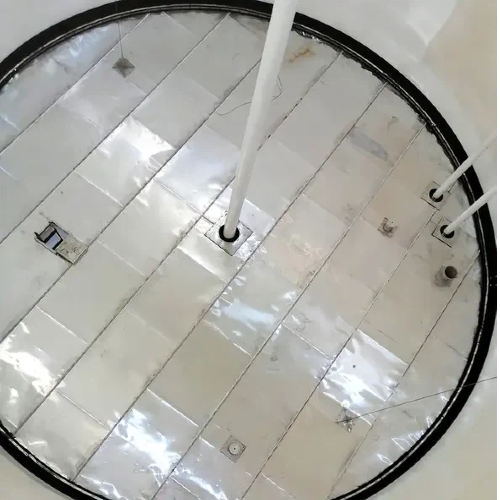
An Internal Floating Roof is a specially designed structure that floats on the surface of the liquid stored in a tank. It adapts to changes in liquid level, maintaining a tight seal and minimizing the vapor space. This reduction in vapor space limits the amount of air that can mix with the liquid, preventing VOCs from evaporating into the atmosphere.
The Internal Floating Roof is equipped with several components that help it perform this function:
Pontoons: These are buoyant structures that allow the roof to float on the liquid surface. The pontoons adjust as the liquid level rises or falls.
Secondary seals: These seals are placed around the perimeter of the roof to ensure that vapor cannot escape through the edges of the roof.
Vent systems: IFRs often incorporate venting systems that regulate the pressure inside the tank, further reducing the potential for VOC emission.
Mechanisms for Reducing Evaporation Loss
The primary way Internal Floating Roofs reduce evaporation loss is by minimizing the vapor space above the liquid. Without an IFR, the vapor space between the liquid and the tank roof allows for significant evaporation of VOCs, especially when storing volatile liquids. When an Internal Floating Roof is used, it adapts to the liquid level, ensuring that the vapor space is as small as possible.
By creating a tight seal, IFRs prevent air and vapors from mixing with the liquid, significantly lowering evaporation rates. The floating roof essentially forms a barrier between the atmosphere and the stored liquid, reducing the surface area that can be exposed to the air. As a result, the volatile compounds in the liquid stay within the tank, reducing the amount lost due to evaporation.
Additional Benefits of Reduced Evaporation Loss
In addition to saving on raw materials, the reduction of evaporation loss brings several other benefits:
Increased product yield: Less evaporation means more product is retained in the tank, improving overall yield.
Reduced environmental footprint: Lower VOC emissions help mitigate air pollution, contributing to a cleaner environment.
Long-term savings: Over time, the reduction in evaporation can result in significant cost savings, particularly for businesses that store large volumes of volatile liquids.
3. Calculating the ROI of Internal Floating Roofs
Understanding ROI and Its Importance
Return on Investment (ROI) is a measure used to evaluate the efficiency of an investment. For Internal Floating Roofs, calculating ROI is essential for determining whether the financial benefits of reduced evaporation loss justify the initial installation costs. In this section, we will explore the key factors that contribute to the ROI of Internal Floating Roofs.
Factors Influencing ROI
Several factors should be considered when calculating the ROI of Internal Floating Roofs:
Initial installation cost: The cost of purchasing and installing an IFR can vary based on tank size, design, and complexity.
Annual product savings: This refers to the amount of product that would have been lost due to evaporation but is now saved by the IFR. This can be calculated by estimating the volume of evaporation reduced over a given period.
Regulatory compliance: The reduction of VOC emissions helps businesses avoid fines for non-compliance with environmental regulations.
Maintenance costs: IFRs also reduce the wear and tear on storage tanks, lowering the need for frequent maintenance.
Methodology for Calculating ROI
To calculate the ROI of installing Internal Floating Roofs, follow this formula:
ROI = (Annual Savings-Installation Cost/Installation Cost)×100
Where:
Annual Savings: The savings from reduced evaporation loss, lower regulatory fines, and reduced maintenance costs.
Installation Cost: The total cost of purchasing and installing the IFR system.
Estimating Savings
The savings from reduced product loss can be substantial. For example, if a business stores 100,000 barrels of oil annually, with a typical evaporation rate of 2% without an IFR, the evaporation loss would amount to 2,000 barrels per year. If the cost of oil is $50 per barrel, this results in a loss of $100,000 annually.
After installing an Internal Floating Roof, evaporation loss can be reduced by up to 95%, saving the company $95,000 per year. These savings can be calculated as part of the ROI.
Table: ROI Calculation Example
Factor | Without IFR | With IFR |
Annual Product Loss (Barrels) | 2,000 | 100 |
Cost per Barrel | $50 | $50 |
Annual Loss ($) | $100,000 | $5,000 |
Savings ($) | - | $95,000 |
Installation Cost ($) | - | $200,000 |
ROI Calculation | - | 47.5% |
4. Long-Term Benefits Beyond ROI
While calculating ROI provides an immediate understanding of the financial benefits of Internal Floating Roofs, there are additional long-term advantages that go beyond the numbers. These benefits may not always be immediately quantifiable but contribute significantly to overall business success.
Enhanced Environmental Compliance
As environmental regulations become stricter globally, businesses face growing pressure to meet compliance standards. Internal Floating Roofs help businesses reduce VOC emissions, ensuring that they meet local, national, and international emissions regulations. Compliance not only avoids fines but also improves a company's reputation as a responsible, environmentally-conscious organization.
Improved Safety
By minimizing the risk of VOC emissions and reducing the amount of volatile product in the air, Internal Floating Roofs contribute to a safer working environment. They help reduce the likelihood of fires and explosions caused by the buildup of flammable vapors in storage tanks. This improves workplace safety for employees and decreases the risk of costly accidents.
Sustainability and Brand Image
Implementing IFRs demonstrates a commitment to sustainability, which can enhance a company’s brand image. Many customers and investors are now prioritizing environmental responsibility, and businesses that take proactive steps to reduce emissions and improve efficiency may gain a competitive advantage.
5. Conclusion
In conclusion, Internal Floating Roofs are essential for reducing evaporation loss and improving the financial sustainability of businesses that store volatile liquids. By calculating the ROI of Internal Floating Roofs, businesses can clearly identify significant financial benefits, including reduced product loss, lower energy costs, and enhanced compliance with environmental regulations. Beyond immediate financial returns, Internal Floating Roofs provide long-term advantages in terms of safety, sustainability, and enhanced brand reputation.
As the demand for businesses to prioritize environmental responsibility and operational efficiency continues to rise, Internal Floating Roofs present a practical, cost-effective solution to manage product loss while increasing profitability. Investing in IFRs not only improves the bottom line but also contributes to a cleaner, safer, and more sustainable future.
At Lianyungang Bona Bangwei Petrochemical Equipment Co., Ltd., we specialize in providing high-quality Internal Floating Roofs and other petrochemical equipment tailored to your needs. Our team is dedicated to helping you improve efficiency, reduce emissions, and achieve compliance with industry standards. We invite you to reach out to us for more information or to discuss how our solutions can support your business goals. Let us help you make a positive impact on both your operations and the environment.
6. FAQ
Q: What is the primary function of an Internal Floating Roof?
A: The primary function of an Internal Floating Roof is to reduce product evaporation loss by minimizing the vapor space above the stored liquid. The roof moves with the liquid level, providing a seal that prevents VOCs from escaping.
Q: How does installing an Internal Floating Roof reduce product loss?
A: An Internal Floating Roof reduces product loss by creating a barrier between the liquid and the atmosphere. By minimizing the vapor space, it significantly reduces the evaporation of volatile compounds, thereby retaining more of the stored product.
Q: How do I calculate the ROI for an Internal Floating Roof?
A: ROI is calculated by comparing the savings from reduced evaporation loss and maintenance costs to the initial installation cost. The formula is:
ROI = (Annual Savings-Installation Cost/Installation Cost)×100
Q: What additional benefits do Internal Floating Roofs provide beyond ROI?
A: Beyond financial savings, Internal Floating Roofs help ensure environmental compliance, improve workplace safety by reducing VOC-related risks, and enhance a company's sustainability profile.


