In the petrochemical, oil, and gas industries, Internal Floating Roofs (IFRs) play an essential role in reducing evaporative loss and minimizing harmful emissions from storage tanks. By acting as a protective layer between the stored liquid and the atmosphere, an Internal Floating Roof helps to prevent the escape of volatile compounds, which could otherwise harm the environment and waste valuable product. At Lianyungang Bona Bangwei Petrochemical Equipment Co., Ltd. (BNBW), we specialize in providing high-quality IFR solutions that not only meet regulatory standards but also contribute to cost savings and operational efficiency. This article explores how an Internal Floating Roof works to reduce evaporative loss and control emissions, ensuring that your storage tank remains safe, efficient, and environmentally compliant.
The Problem with Vapor Loss in Storage Tanks
Evaporative loss is a significant issue in the storage of volatile liquids. When liquids such as crude oil, gasoline, or chemicals are stored in tanks, they are exposed to the air, causing some of the liquid to evaporate. This evaporation not only leads to product loss but also contributes to air pollution, as harmful vapors and volatile organic compounds (VOCs) are released into the environment.
Why Evaporative Losses Matter
Evaporative loss matters for several reasons:
Environmental Impact: VOCs contribute to air pollution and can create harmful smog, which affects air quality and the environment.
Product Loss: Every time a volatile liquid evaporates, valuable product is lost, which increases operational costs.
Regulatory Compliance: Many countries and regions have stringent regulations on emissions, making it necessary for businesses to minimize evaporative losses to meet legal standards.
The Internal Floating Roof (IFR) addresses these issues by providing a physical barrier that reduces vapor space in the tank, thus limiting the amount of volatile liquid that can evaporate. By doing so, an IFR not only helps to minimize product loss but also improves compliance with environmental standards.
IFR’s Vapor Space Minimization
One of the key functions of an Internal Floating Roof is vapor space minimization. The term "vapor space" refers to the area between the surface of the liquid and the roof of the tank, which can be a source of evaporative loss.
How IFR Reduces Ullage and Vapors
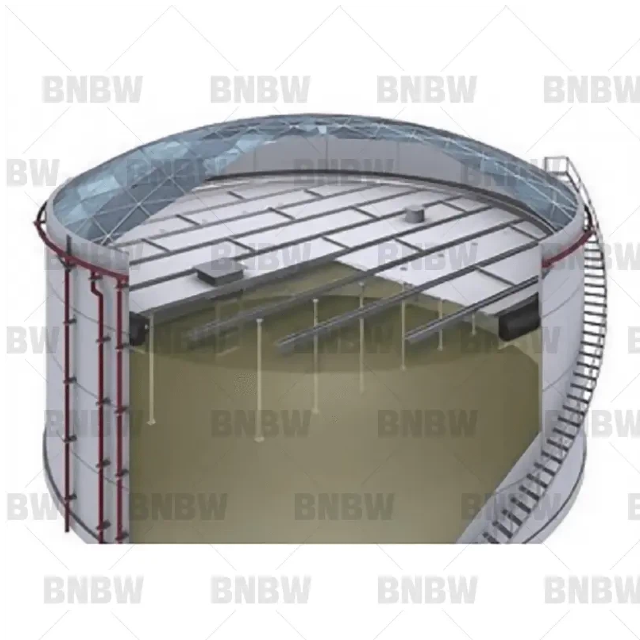
An Internal Floating Roof floats on the liquid’s surface and adjusts with fluctuations in liquid level, effectively minimizing the ullage (vapor space) in the tank. This is achieved through the design of the IFR, whether it’s a pontoon IFR or a full contact IFR.
Pontoon IFR: Uses pontoons to maintain buoyancy, which allows the roof to float on the liquid surface. This design leaves a small vapor space, but it still significantly reduces the amount of vapor that escapes compared to tanks without an IFR.
Full Contact IFR: The roof rests directly on the liquid, leaving no vapor space at all. This design is more effective at vapor suppression, making it ideal for tanks storing highly volatile liquids.
By reducing the vapor space, the IFR prevents the stored liquid from being exposed to the air, significantly reducing the evaporative loss.
Vapor Barrier Mechanisms
An essential feature of the Internal Floating Roof is the vapor barrier it provides. The vapor barrier consists of seals and other structural elements that ensure the roof remains in contact with the liquid surface, preventing vapor from escaping into the air. Sealing systems, such as rim seals, shoe seals, and secondary seals, are used to create a tight barrier, further enhancing the vapor suppression capabilities of the IFR.
Environmental and Regulatory Benefits
The environmental benefits of using an Internal Floating Roof are substantial. One of the most important advantages is its ability to control emissions of volatile organic compounds (VOCs), which are harmful to both human health and the environment.
Emission Control for VOCs
VOCs are a major environmental concern, particularly in industries dealing with petroleum, chemicals, and other volatile liquids. The Internal Floating Roof helps to control VOC emissions by maintaining a tight seal between the liquid and the atmosphere. This seal prevents the escape of vapors that would otherwise contribute to air pollution.
Compliance with Stricter Standards
With the tightening of environmental regulations globally, businesses in industries like oil storage, petrochemicals, and chemical processing must comply with stringent emission standards. An Internal Floating Roof is designed to meet these standards, helping companies reduce emissions and avoid hefty fines for non-compliance. By minimizing the vapor space and containing VOCs, the IFR ensures that your storage tank adheres to the strictest environmental regulations.
Case Examples of Emission Reductions
For example, a tank storing crude oil equipped with an Internal Floating Roof can see a 50-90% reduction in vapor emissions, depending on the volatility of the product and the type of IFR used. This reduction not only helps meet legal emission limits but also contributes to better air quality in surrounding areas.
Impact on Storage Economics
While the environmental and regulatory benefits of an Internal Floating Roof are clear, the economic advantages are just as important. By reducing evaporative losses, improving vapor suppression, and enhancing energy efficiency, an IFR can deliver a significant return on investment (ROI).
Reduced Product Loss
One of the most direct financial benefits of an Internal Floating Roof is the reduced product loss. For tanks storing volatile liquids, evaporative loss can amount to substantial quantities of product over time. By minimizing vapor exposure, an IFR significantly reduces the amount of liquid lost through evaporation, which leads to cost savings. The savings from reduced product loss can often outweigh the initial investment in the IFR system.
Cost Savings and ROI
The cost savings from using an Internal Floating Roof extend beyond product loss reduction. By reducing VOC emissions, companies can avoid penalties and fines related to non-compliance with environmental regulations. Additionally, the reduced need for maintenance due to the roof’s durability and effectiveness in controlling emissions means lower operational costs in the long term.
Energy Savings Effects
Energy savings are another benefit of using an Internal Floating Roof. In some cases, when liquid volatility is controlled effectively, it can reduce the need for additional energy-intensive systems to maintain tank temperature and pressure. The vapor suppression offered by the IFR reduces the need for additional refrigeration or cooling systems, providing further cost savings.
Benefits Table – With vs. Without IFR
The table below compares the emission reduction and product loss metrics for tanks with and without an Internal Floating Roof:
Table: Emission and Loss Comparison
Metric | With IFR | Without IFR |
Vapor Emissions | Significantly reduced | Higher |
Product Loss | Minimal | Higher |
Regulatory Compliance | Easier | Harder |
Operating Cost | Lower over the long term | Higher |
As shown in the table, the Internal Floating Roof has a clear advantage in terms of emission reduction, product loss, regulatory compliance, and operating costs. By investing in an IFR, companies can expect a long-term return on investment through both cost savings and environmental compliance.
Conclusion
An Internal Floating Roof (IFR) is a vital solution for reducing evaporative loss and controlling emissions from storage tanks. Whether you are storing crude oil, chemicals, or other volatile liquids, an IFR provides environmental benefits, cost savings, and improved regulatory compliance. At BNBW, we specialize in providing high-quality, customizable IFRs that help you optimize your storage tanks and meet strict environmental standards. To learn more or get a quote for your Internal Floating Roof solution, contact us today!
FAQ
1. What is the main purpose of an Internal Floating Roof?
An Internal Floating Roof (IFR) helps reduce evaporative losses and emissions from storage tanks by floating on the liquid surface and minimizing vapor exposure.
2. How does an IFR help with emission control?
An Internal Floating Roof reduces vapor space in the tank, which helps control VOC emissions and ensures compliance with environmental standards.
3. Can an IFR save money on operational costs?
Yes, by reducing product loss, improving vapor suppression, and ensuring regulatory compliance, an Internal Floating Roof can lead to significant cost savings and better ROI.
4. What industries benefit from using an IFR?
Industries such as oil and gas, petrochemical, and chemical processing benefit from using Internal Floating Roofs to reduce evaporative loss and emissions in storage tanks.


