Introduction
Marine loading arms (MLAs) are vital for safe and efficient liquid transfers between ships and terminals. They handle liquids like crude oil, chemicals, and LNG, ensuring smooth operations. Selecting the right MLA is crucial for safety, efficiency, and compliance. In this guide, we’ll explore the key factors you must consider when choosing the perfect MLA for your terminal.
Understanding Marine Loading Arms
What is a Marine Loading Arm?
A Marine Loading Arm is a mechanical system designed to facilitate the transfer of liquid substances from a ship to a terminal or vice versa. They typically consist of a series of rigid pipes connected by swivel joints, allowing for flexibility and movement as the vessel docks and shifts. MLAs are equipped with balance mechanisms, such as counterweights or spring balance cylinders, to ensure smooth, safe operation.
These systems are engineered to prevent hazardous spills and leaks, making them crucial for industries where safety is paramount. In addition to reducing the risk of contamination, MLAs increase operational efficiency, minimize downtime, and extend the service life of equipment.
Key Features of Marine Loading Arms
Marine loading arms come in various configurations to suit different types of operations and vessel sizes. Key features include:
● Customization Options: MLAs can be tailored to fit specific vessel sizes, cargo types, and terminal configurations, ensuring compatibility with your operation.
● Materials: MLAs are commonly made from durable materials such as stainless steel, aluminum, and galvanized steel. These materials are selected based on their strength, resistance to corrosion, and compatibility with the fluids being transferred.
● Safety Features: Advanced safety mechanisms like Emergency Release Systems (ERS), quick-connect couplers, and automated controls are integral to MLAs, ensuring the safety of personnel and the environment.
Factors to Consider When Selecting a Marine Loading Arm
Environmental and Operational Conditions
Marine environments are dynamic, with conditions such as tides, wind, and waves directly affecting loading operations. When selecting an MLA, it’s crucial to consider these environmental factors. For example:
● Tidal Fluctuations: MLAs must be capable of accommodating varying water levels, ensuring the transfer process remains efficient and safe even during low or high tides.
● Vessel Movement: The MLA must be designed to follow the ship's movements, including drafts and surges, ensuring continuous liquid flow without causing damage or spills.
Liquid Type and Temperature Considerations
The type of liquid being transferred plays a significant role in MLA selection. Different substances, such as crude oil, LNG, and chemicals, each require specific design features. Temperature-sensitive media, such as cryogenic liquids (e.g., LNG), require specialized MLAs with insulation to maintain product integrity during transfer.
Compliance with International Standards
Ensuring that your MLA adheres to industry standards is critical for safety and compliance. Marine loading arms must comply with regulations set by organizations such as the Oil Companies International Marine Forum (OCIMF), ISO, and ASME. These standards help ensure the structural integrity, safety, and environmental protection of the equipment, reducing operational risks.
Types of Marine Loading Arms
Hydraulic vs. Mechanical Marine Loading Arms
Marine loading arms can be powered hydraulically or mechanically. The choice between these options depends on the specific needs of the terminal:
● Hydraulic MLAs: These systems offer higher power output and are typically used in large-scale operations or where greater flexibility is required. They can be operated with minimal manual input and are ideal for heavy-duty applications.
● Mechanical MLAs: These arms rely on manual or mechanical systems for operation. They are typically more cost-effective but may not provide the same level of power or flexibility as hydraulic versions.
Top vs. Bottom Loading Arms
Marine loading arms can also be classified based on their loading position:
● Top Loading Arms: These are used when transferring liquids through a top-mounted manhole, commonly found in truck or railcar operations.
● Bottom Loading Arms: These are typically used in marine terminals for loading or unloading ships from the bottom of the tank. They are well-suited for transferring liquids to and from tankers.
The choice between top and bottom loading arms will depend on the type of vessel and the specific transfer operation.
Custom and Modular MLAs
Custom-designed MLAs can be tailored to the unique requirements of a terminal, vessel, or liquid type. Modular MLAs, on the other hand, offer flexibility and can be adapted to meet changing operational needs. These systems allow for easy customization in terms of size, flow rate, and connection types, making them suitable for a wide range of applications.
Key Considerations for MLA Installation and Setup
Site Assessment and Alignment
Before installation, a thorough site assessment is essential to determine the most appropriate MLA for your terminal. This includes evaluating the docking location, tide variations, and space constraints. Proper alignment with the ship’s manifold and terminal connection points is crucial to ensure smooth and efficient loading operations.
Testing and Commissioning
Before putting the MLA into operation, it’s essential to conduct rigorous testing. This includes pressure tests, system checks, and simulations of various operational scenarios. Ensuring the MLA functions correctly in real-world conditions helps prevent failures and operational interruptions once it’s in use.
Ongoing Maintenance and Monitoring
Regular maintenance and condition monitoring are vital for ensuring the long-term reliability of marine loading arms. Routine inspections should be conducted to check for wear, corrosion, and potential malfunctions. Implementing a predictive maintenance program can help detect issues early, reducing downtime and repair costs.
Advantages of Using Marine Loading Arms
Safety and Spill Prevention
Marine loading arms significantly reduce the risk of spills, which can be both costly and hazardous. By using rigid piping and safety features like Emergency Release Systems (ERS), MLAs provide secure connections between ships and terminals, minimizing the risk of leaks and spills.
Efficiency and Cost-Effectiveness
MLAs increase operational efficiency by reducing downtime and enabling faster loading/unloading times. They are more durable and reliable than alternative transfer methods like hoses, which can wear out more quickly and require frequent maintenance. Well-maintained MLAs also reduce overall operational costs.
Enhanced Ergonomics and User-Friendliness
Modern marine loading arms are designed with ergonomics in mind. Features like quick-connect couplers, pneumatic assists, and counterbalance systems make it easier for operators to handle MLAs, reducing the risk of injury and improving overall operational efficiency.
Common Mistakes to Avoid When Selecting a Marine Loading Arm
Overlooking Environmental Factors
Neglecting environmental conditions, such as tides and vessel movement, when selecting an MLA can lead to operational inefficiencies and increased risk of equipment failure. Ensure your MLA is designed to withstand the specific environmental conditions at your terminal.
Failing to Account for Specific Cargo Types
Using a generic MLA for specialized liquids, such as LNG or chemicals, can lead to unsafe operations and compromised product integrity. Ensure your MLA is tailored to handle the specific characteristics of the liquid being transferred.
Ignoring Industry Standards and Compliance
Failing to adhere to industry standards can result in safety violations, costly fines, and operational shutdowns. Always ensure your MLA complies with the necessary safety and operational standards set by relevant authorities.
Conclusion
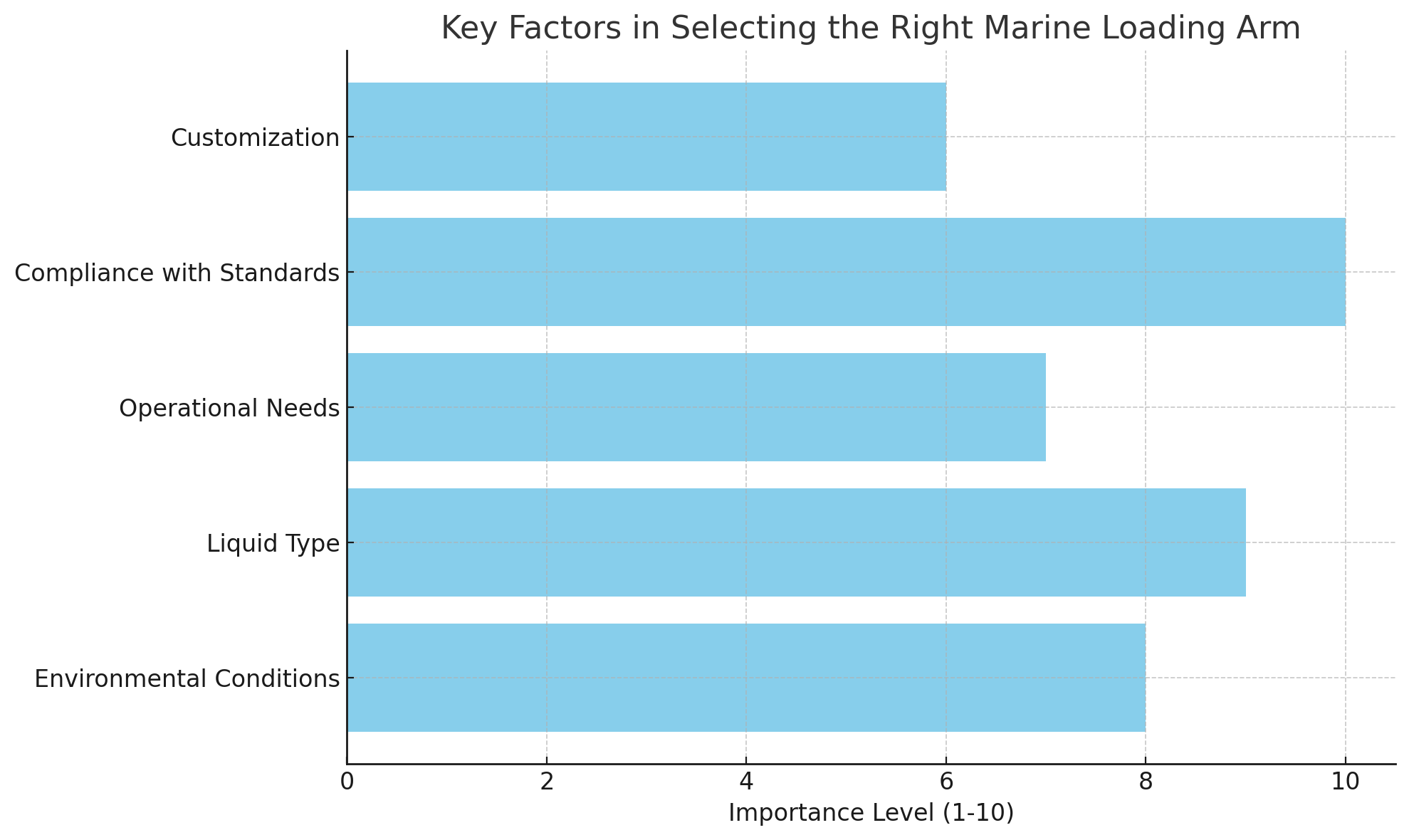
Selecting the right marine loading arm is essential for terminal operators. Considering factors like environmental conditions, liquid type, and operational needs will help ensure safe, efficient, and compliant operations. Expert consultation and customization are key to meeting specific demands. BNBW offers high-quality marine loading arms, providing tailored solutions that improve safety and efficiency in liquid transfers.
FAQ
Q: What is a Marine Loading Arm and how does it work?
A: A Marine Loading Arm is a mechanical system used to transfer liquids safely between ships and shore terminals. It consists of rigid pipes and swivel joints, allowing for flexibility and stability during the transfer process.
Q: Why is it important to select the right Marine Loading Arm for my terminal?
A: Selecting the right Marine Loading Arm ensures safe, efficient, and compliant operations. It helps prevent spills, minimizes downtime, and meets industry standards, ultimately improving operational efficiency.
Q: What factors should be considered when choosing a Marine Loading Arm?
A: Key factors include environmental conditions, liquid type, operational needs, and compliance with safety standards. Customization based on these factors ensures the MLA meets specific operational requirements.
Q: How do Marine Loading Arms improve safety at terminals?
A: Marine Loading Arms enhance safety by preventing spills, offering emergency release systems, and providing secure connections between ships and terminals, reducing hazardous exposure for staff.
Q: What are the advantages of using a hydraulic Marine Loading Arm over a mechanical one?
A: Hydraulic Marine Loading Arms provide greater power and flexibility, making them ideal for large-scale operations. They require less manual effort and can handle more complex transfer tasks compared to mechanical arms.
Q: How do environmental conditions affect the performance of Marine Loading Arms?
A: Environmental factors like tides, wind, and vessel movements influence MLA design. It’s important to select an MLA that can adapt to these conditions to ensure continuous, efficient, and safe liquid transfer.


