Introduction
Marine loading arms (MLAs) are crucial for safely transferring liquids and gases in tough marine environments. Exposed to saltwater, extreme temperatures, and constant wear, they require materials that offer durability and corrosion resistance.
This article explores how advanced materials are revolutionizing MLA construction. We’ll discuss how these materials improve performance, extend lifespan, and reduce maintenance costs, ensuring efficiency and reliability in marine operations.
The Importance of Durability and Corrosion Resistance in Marine Loading Arms
Challenges Faced by Marine Loading Arms in Marine Environments
Marine loading arms are exposed to some of the harshest conditions imaginable. Saltwater corrosion is one of the most significant threats to the longevity of these components, leading to material degradation over time. Additionally, environmental factors like humidity, extreme temperatures, and physical stress from waves and wind further accelerate wear and tear. For MLAs to perform optimally and maintain safety, they must be constructed from materials that can resist these challenges.
Durability and corrosion resistance are not optional in the marine industry but rather essential features. Without these qualities, marine loading arms would require constant repairs, leading to increased downtime and maintenance costs.
The Consequences of Material Failure in Marine Loading Arms
Material failure in marine loading arms can have severe operational and environmental consequences. Corrosion can weaken the structural integrity of the arm, causing leaks or even complete failure during operation. Such failures not only disrupt operations but also pose significant environmental risks, especially when transporting hazardous liquids like crude oil or chemicals.
From a financial perspective, the costs of replacing or repairing damaged loading arms are substantial. More importantly, the downtime associated with these repairs can disrupt the entire shipping or cargo operation, leading to delays and lost revenue.
Advanced Materials Revolutionizing Marine Loading Arm Construction
Types of Advanced Materials Used in Marine Loading Arm Construction
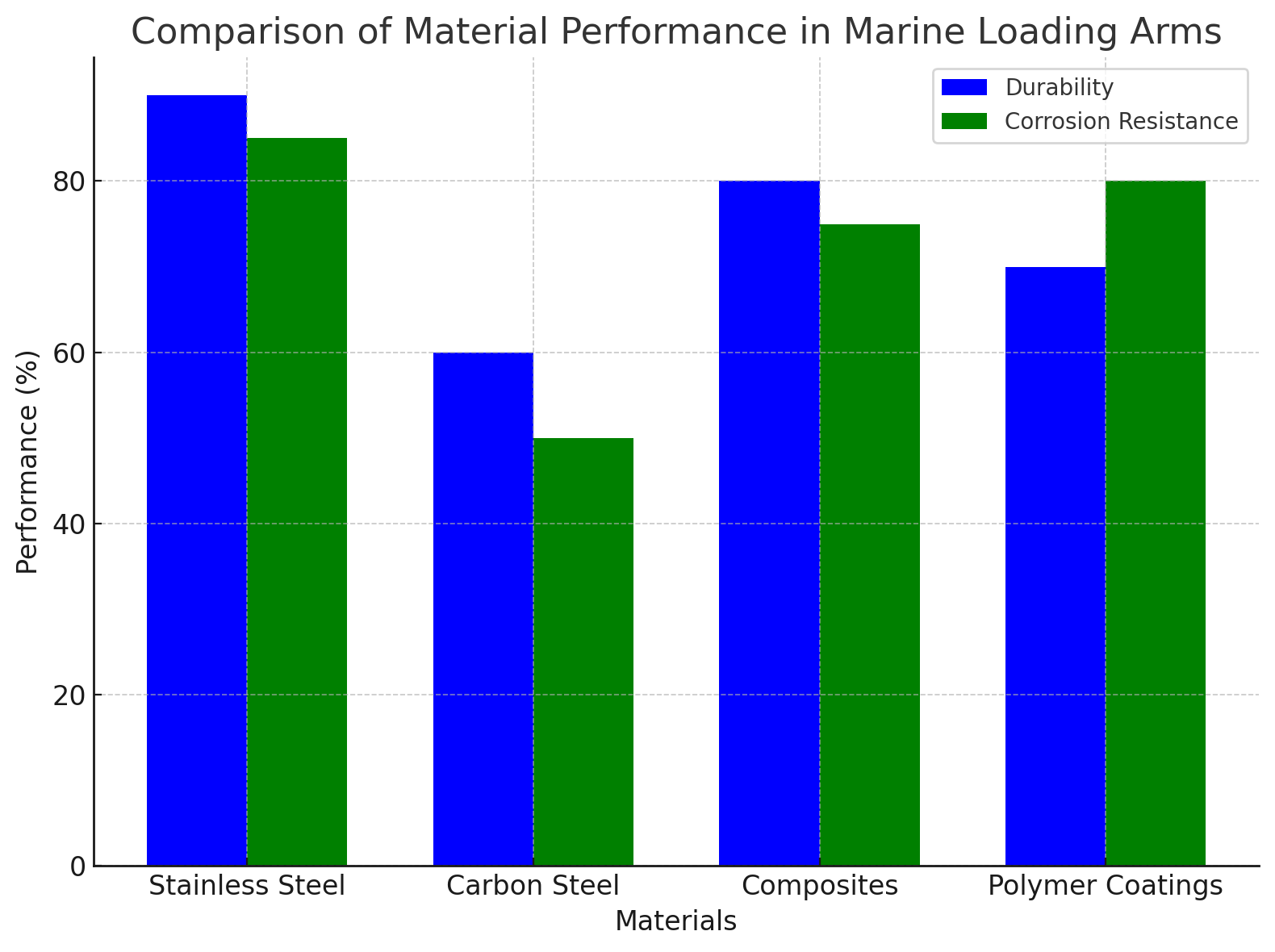
The development of advanced materials has revolutionized the design and construction of marine loading arms. These materials include high-performance metals, composite materials, and polymer coatings, each contributing unique benefits.
1. Stainless Steel Alloys: Known for their corrosion resistance and strength, stainless steel alloys are ideal for marine environments, offering both durability and resistance to seawater corrosion.
2. Composites: Composed of fibers like carbon fiber or glass fiber, composites offer excellent strength-to-weight ratios while resisting corrosion.
3. Polymer Coatings: These coatings protect against corrosion and wear, enhancing the longevity of marine loading arms.
These advanced materials improve the mechanical strength of the MLAs while providing better resistance to environmental factors, ultimately increasing their operational efficiency and reducing maintenance requirements.
Carbon Steel vs. Stainless Steel in Marine Loading Arms
When comparing carbon steel and stainless steel for marine loading arm construction, stainless steel is generally the superior choice due to its superior corrosion resistance and longevity. Carbon steel, while cheaper, is prone to rust and deterioration when exposed to seawater, requiring regular maintenance and replacements.
Stainless steel alloys, particularly those with a high nickel content, are more resilient to the aggressive marine environment, making them ideal for long-term use. This choice reduces operational costs in the long run, as it minimizes the need for frequent repairs and replacements.
The Role of Composite Materials in Enhancing Durability
Composites such as carbon fiber and glass fiber have become increasingly popular in marine loading arm construction due to their exceptional durability, corrosion resistance, and lightweight nature. These materials allow MLAs to handle heavier loads without compromising flexibility or performance. Additionally, composites resist saltwater corrosion and physical wear, making them ideal for use in the marine industry.
Incorporating composites into marine loading arms also reduces their weight, which helps to enhance the overall energy efficiency of the system. This is especially important in vessels that need to maintain high fuel efficiency, as the reduced weight leads to better fuel economy.
How Advanced Materials Improve the Performance of Marine Loading Arms
Enhancing Load-bearing Capacity and Flexibility
Advanced materials increase the load-bearing capacity of marine loading arms, allowing them to support larger volumes of liquids and gases. These materials also provide the flexibility needed to adapt to varying vessel sizes and environmental conditions, ensuring smooth operations even in rough seas or harsh weather.
For example, stainless steel and composites enhance the mechanical properties of marine loading arms, enabling them to handle higher pressure and accommodate dynamic loading from waves and tides. This flexibility is essential for ensuring reliable and efficient operations in diverse marine environments.
Extending the Lifespan of Marine Loading Arms
One of the primary benefits of using advanced materials is the significant increase in the lifespan of marine loading arms. Materials like stainless steel alloys and composites resist corrosion and wear much better than traditional metals, reducing the frequency of repairs and replacements. This leads to lower lifecycle costs, making MLAs a more cost-effective solution in the long term.
Real-world examples show that marine loading arms constructed with high-performance materials have lasted significantly longer without major repairs compared to those made with traditional materials. This longevity reduces maintenance costs and enhances operational continuity.
Environmental and Cost Benefits of Advanced Materials
The use of corrosion-resistant materials in marine loading arms not only benefits operational efficiency but also has significant environmental advantages. By minimizing the risk of leaks and spills, these materials help protect the marine environment from harmful contamination.
Additionally, the reduced need for repairs and replacements leads to cost savings. Businesses can invest in more durable solutions upfront, which will pay off in terms of reduced maintenance and downtime.
Innovations in Marine Loading Arm Materials for Extreme Environments
Cryogenic and High-Pressure Applications
In applications involving cryogenic liquids, such as liquefied natural gas (LNG), marine loading arms require specialized materials that can withstand extreme temperatures. Advanced cryogenic-resistant alloys are designed to maintain their strength and durability even at temperatures as low as -196°C. These materials ensure the safe transfer of liquefied gases, preventing failures due to material brittleness or cracking.
High-pressure applications also demand materials that can withstand immense stress. Advanced alloys and composites can handle the high pressures involved in these transfers without compromising the integrity of the marine loading arm.
Advances in Coating Technologies for Corrosion Protection
The development of advanced coating technologies has greatly improved the performance of marine loading arms. Ceramic and epoxy coatings, along with self-healing coatings, offer enhanced corrosion resistance. Self-healing coatings, in particular, are capable of repairing minor damages automatically, ensuring long-term protection against the corrosive effects of seawater.
These coatings not only protect the structural integrity of marine loading arms but also reduce the need for regular maintenance, enhancing operational efficiency.
Industry Trends and Future Outlook for Advanced Materials in Marine Loading Arm Construction
Adoption of Nano-materials and Smart Coatings
The use of nano-materials such as graphene and carbon nanotubes is an emerging trend in marine loading arm construction. These materials offer superior mechanical and thermal properties, enabling the construction of lighter and more durable MLAs. Additionally, smart coatings embedded with sensors can monitor the health of the structure, providing real-time data for maintenance and safety interventions.
Sustainable Materials in Marine Loading Arm Design
As sustainability becomes a priority in the marine industry, the use of eco-friendly materials is increasing. Bio-based composites and recyclable materials are gaining traction, providing the necessary durability while reducing the environmental impact of manufacturing and disposal. These materials align with global efforts to minimize carbon footprints and reduce waste in the marine industry.
Research and Development: What’s Next for Marine Loading Arm Materials?
Ongoing research in marine materials focuses on enhancing their properties and performance. Researchers are investigating new composite materials, innovative coatings, and advanced alloys that offer even better corrosion resistance, fatigue resistance, and weight reduction. The development of these materials will further push the boundaries of what marine loading arms can achieve in terms of durability and efficiency.
Conclusion
Advanced materials are key to improving the durability and corrosion resistance of marine loading arms. They enhance performance, extend lifespan, and reduce maintenance costs, ensuring safer and more efficient operations. Companies like BNBW offer customizable marine loading arms, integrating advanced materials to meet the highest standards of safety, durability, and efficiency. Investing in these materials helps businesses ensure reliable, long-lasting operations in harsh marine environments.
FAQ
Q: What is the role of advanced materials in marine loading arm construction?
A: Advanced materials enhance the durability and corrosion resistance of marine loading arms, ensuring their effectiveness in harsh marine environments.
Q: Why are marine loading arms exposed to corrosion in marine environments?
A: Marine loading arms face corrosion due to saltwater exposure, humidity, and extreme temperatures, making durable, corrosion-resistant materials essential.
Q: How do advanced materials improve the performance of marine loading arms?
A: Advanced materials improve the performance of marine loading arms by enhancing load-bearing capacity, flexibility, and corrosion resistance in demanding conditions.
Q: What types of materials are commonly used in marine loading arm construction?
A: High-performance materials like stainless steel alloys, composites, and polymer coatings are commonly used to resist corrosion and extend the lifespan of marine loading arms.
Q: How do composite materials benefit marine loading arms?
A: Composite materials, such as carbon fiber and glass fiber, reduce weight, improve corrosion resistance, and increase strength, enhancing the overall durability of marine loading arms.
Q: What are the environmental benefits of using advanced materials in marine loading arms?
A: Advanced materials reduce maintenance needs and improve the lifespan of marine loading arms, which lowers the environmental impact and reduces material waste.
Q: How do advanced materials reduce maintenance costs for marine loading arms?
A: By improving corrosion resistance and durability, advanced materials reduce the frequency of repairs and replacements, leading to lower long-term maintenance costs for marine loading arms.


