Introduction
Marine loading arms (MLAs) are essential for safe and efficient liquid transfer between ships and shore terminals. However, these systems are prone to wear, environmental stress, and operational fatigue.
Maximizing uptime is critical to avoid costly downtime and delays. This guide covers best practices for inspecting, maintaining, and retrofitting MLAs to ensure reliability and efficiency throughout their lifecycle.
Key Factors Impacting Marine Loading Arm Uptime
Environmental Conditions
Marine loading arms operate in harsh environments, with exposure to varying weather conditions, tides, and sea states. High winds, rough seas, and fluctuating water levels can place additional strain on the components of an MLA, particularly when it comes to the arm’s ability to move smoothly and securely. Furthermore, temperature fluctuations—especially in areas dealing with cryogenic liquids—can affect the integrity of seals and joints, potentially leading to leaks or mechanical failure.
To maximize uptime, it is essential that marine loading arms are designed and installed to withstand these challenges. The proper selection of materials, seals, and coatings that are resistant to corrosion and damage from extreme temperatures will help prolong the service life of the arm. Additionally, regular environmental assessments and real-time monitoring systems should be used to predict and manage the impact of weather-related variables.
Operational Demands
Marine loading arms are often part of high-volume operations, where speed and reliability are essential. Terminal operators rely on MLAs to handle the transfer of liquids quickly and efficiently, reducing the time vessels spend in port. When operations are fast-paced, there is an increased risk of mechanical stress and potential breakdowns, particularly if maintenance schedules are neglected or not prioritized.
To balance these demands with the need for ongoing maintenance, operators should develop structured routines for inspection and upkeep. Preventive maintenance schedules should align with the typical operational cycles, ensuring that inspections and adjustments are made before the systems are pushed beyond their limits. Additionally, backup systems or loading arms should be available to minimize downtime when one arm requires servicing.
Reliability and Safety Standards
Compliance with international safety and operational standards, such as those set by the International Maritime Organization (IMO) and the Oil Companies International Marine Forum (OCIMF), is critical to maintaining uptime. These guidelines outline the necessary performance, safety, and environmental standards for MLAs. Failing to adhere to these regulations can lead to significant risks, including operational failures, environmental damage, and even legal penalties.
Operators should regularly audit their systems to ensure compliance with safety standards, investing in ongoing training for maintenance staff to keep up with industry best practices. Additionally, it is crucial that MLAs are equipped with emergency release systems (ERS) and other fail-safe mechanisms to prevent catastrophic failures during operation.
Best Practices for Marine Loading Arm Inspection
Routine Inspections
One of the most effective ways to maximize uptime is through regular, detailed inspections. Inspections should be conducted on a schedule that allows operators to identify early signs of wear or damage. During inspections, key components such as swivel joints, seals, hydraulic systems, and emergency release systems (ERS) should be thoroughly checked for leaks, wear, and potential failure points.
Routine visual inspections should be complemented with non-invasive diagnostic methods, such as ultrasonic testing and pressure testing, to detect internal wear that might not be visible. The goal is to catch problems early before they lead to unplanned downtime or damage to critical components.
Advanced Diagnostic Techniques
With the advancements in predictive maintenance technology, operators now have access to tools that can diagnose potential issues before they result in mechanical failure. Vibration analysis, pressure testing, and the use of IoT sensors are critical to identifying issues such as misalignment, wear on moving parts, or pressure drops that indicate system inefficiency.
Real-time monitoring tools can send alerts to maintenance teams when performance deviates from the established norms, allowing for timely intervention. These technologies not only help reduce downtime but also improve operational efficiency by identifying issues proactively.
Documentation and Record Keeping
Thorough documentation is crucial for tracking the performance of marine loading arms over time. By maintaining accurate records of inspections, repairs, and maintenance activities, operators can identify patterns in equipment behavior and make informed decisions about future maintenance needs. Digital tools can be used to store and analyze this data, helping operators optimize their maintenance strategies and reduce the risk of equipment failure.
Maintenance Best Practices for Maximizing Uptime
Preventive Maintenance
Preventive maintenance is the backbone of any successful uptime strategy. By following manufacturer recommendations and analyzing historical performance data, operators can develop a preventive maintenance schedule that addresses the most common causes of downtime. Key tasks include lubricating moving parts, cleaning components, and replacing worn seals or seals that may be susceptible to degradation due to environmental exposure.
The preventive maintenance approach helps identify issues before they develop into serious failures, ensuring that MLAs continue to perform at their highest capacity for longer periods. It also enables operators to plan maintenance around the natural operational cycles of the terminal, thus minimizing disruptions to service.
Condition-Based Monitoring
Condition-based maintenance takes a more data-driven approach by monitoring the health of the system in real time. Using sensors and diagnostic tools, operators can track key performance indicators such as pressure, temperature, and load. By analyzing this data, they can identify when a component is approaching the end of its service life or is at risk of failure.
This method allows for more efficient maintenance schedules and reduces the frequency of unnecessary maintenance checks. Only when critical components show signs of wear or inefficiency do they require attention, thus reducing downtime and saving resources.
Run-to-Failure Strategy
In some cases, allowing a component to run until it fails is an acceptable approach, particularly for less critical components. However, it is essential that a rapid response is in place for such scenarios to minimize downtime and prevent secondary failures from spreading through the system. Identifying components that are less crucial to the operation and adopting a run-to-failure strategy for these parts can save maintenance costs without impacting overall uptime.
Retrofit Projects to Improve Efficiency and Uptime
Identifying Retrofit Needs
Over time, marine loading arms may become less efficient due to outdated technology, wear, or changing operational demands. Retrofitting older systems is a practical way to extend the life of MLAs and enhance their performance without the cost of a complete replacement. Identifying retrofit needs involves monitoring system performance and assessing whether upgrading certain components could improve efficiency, reduce energy consumption, or enhance safety.
Indicators that a marine loading arm may benefit from retrofitting include frequent breakdowns, reduced transfer speeds, or failures to meet modern safety standards.
Common Retrofit Options
Common retrofitting options include upgrading hydraulic systems, seals, and safety features. For instance, upgrading to automated controls can help streamline operations and reduce the need for manual intervention. Modern materials can be used to replace outdated components that are prone to corrosion or wear, and the integration of new technologies like real-time sensors can improve the overall reliability of the system.
Retrofitting also offers the opportunity to improve energy efficiency, which can lead to cost savings over time. The integration of automated systems, for example, can optimize the performance of marine loading arms, ensuring that they operate at maximum efficiency with minimal human intervention.
Successful Retrofit Case Studies
There have been numerous successful retrofit projects that significantly reduced downtime and improved the overall performance of marine loading arms. For example, in a case study involving an LNG terminal, operators successfully retrofitted four marine loading arms with isolation valves, reducing downtime during maintenance from multiple days to just 72 hours. This project not only improved system uptime but also ensured compliance with updated safety standards.
Managing Downtime During Inspection and Maintenance
Minimizing Impact of Maintenance
While maintenance is inevitable, the impact of downtime can be minimized by carefully planning maintenance schedules and using backup systems. One effective strategy is to schedule inspections and repairs during off-peak operational hours when possible, so that the terminal can continue to operate with minimal disruptions.
Additionally, having standby equipment or alternate marine loading arms in place can help maintain operations while the primary systems undergo maintenance. Effective communication with stakeholders is crucial during these times to ensure that everyone involved understands the maintenance schedules and any potential impacts on the workflow.
Fast-Track Solutions for Emergency Repairs
Emergency repairs can be disruptive, but they can be minimized by having a fast-track maintenance process in place. This includes keeping critical spare parts on-site and having a trained emergency response team ready to address failures as soon as they occur.
Real-time monitoring systems are essential in this process, as they can quickly identify issues that require urgent attention, allowing the team to respond rapidly and avoid prolonged downtime.
Technological Solutions for Fast Response
Advances in monitoring and diagnostic technologies have enabled terminal operators to respond to maintenance issues quickly. Using remote diagnostics and predictive analytics, operators can make faster, more informed decisions about repairs, often addressing issues before they escalate. Real-time data allows teams to pinpoint the exact cause of failure and expedite the troubleshooting process, ensuring that downtime is minimized.
Conclusion
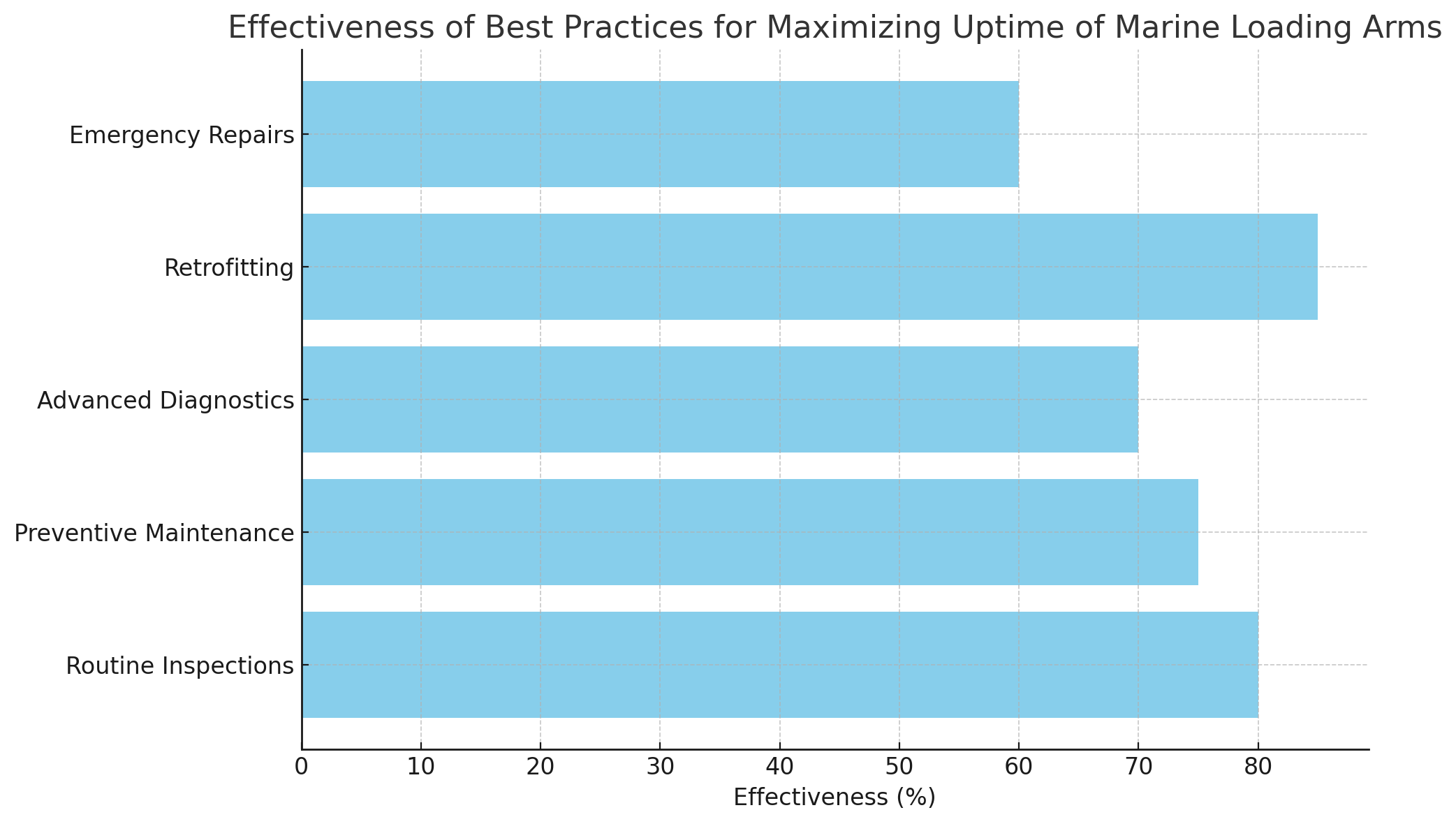
To maximize uptime for marine loading arms, terminal operators must prioritize routine inspections, preventive maintenance, and necessary retrofitting. Using advanced diagnostic tools and responding promptly to failures can significantly reduce downtime. By leveraging solutions from BNBW, operators can enhance performance, extend service life, and improve reliability, ensuring long-term profitability. BNBW offers expert inspection, retrofitting, and maintenance services to optimize MLA operations.
FAQ
Q: What is a Marine Loading Arm and why is it important?
A: A Marine Loading Arm (MLA) is a key system used in the safe transfer of liquids and gases between ships and shore terminals. Its efficiency directly impacts operational uptime, making it crucial for maintaining continuous, safe, and effective terminal operations.
Q: How can I maximize uptime for my Marine Loading Arm?
A: Regular inspections, preventive maintenance, and timely retrofitting are essential to maximize uptime for Marine Loading Arms. Utilizing advanced diagnostic tools helps identify issues before they lead to downtime, ensuring smooth operations.
Q: Why is preventive maintenance important for Marine Loading Arms?
A: Preventive maintenance helps detect potential issues early, reducing the risk of unexpected failures. Regular checks on seals, swivel joints, and hydraulic systems ensure the Marine Loading Arm operates efficiently and safely, maximizing uptime.
Q: What are common retrofit projects for Marine Loading Arms?
A: Retrofitting involves upgrading key components like hydraulic systems, seals, and safety features. It improves performance, enhances safety, and extends the service life of the Marine Loading Arm, minimizing downtime.


