| Material: | |
|---|---|
| Size: | |
| Used: | |
| Availability: | |
| Quantity: | |
A14
BNBW
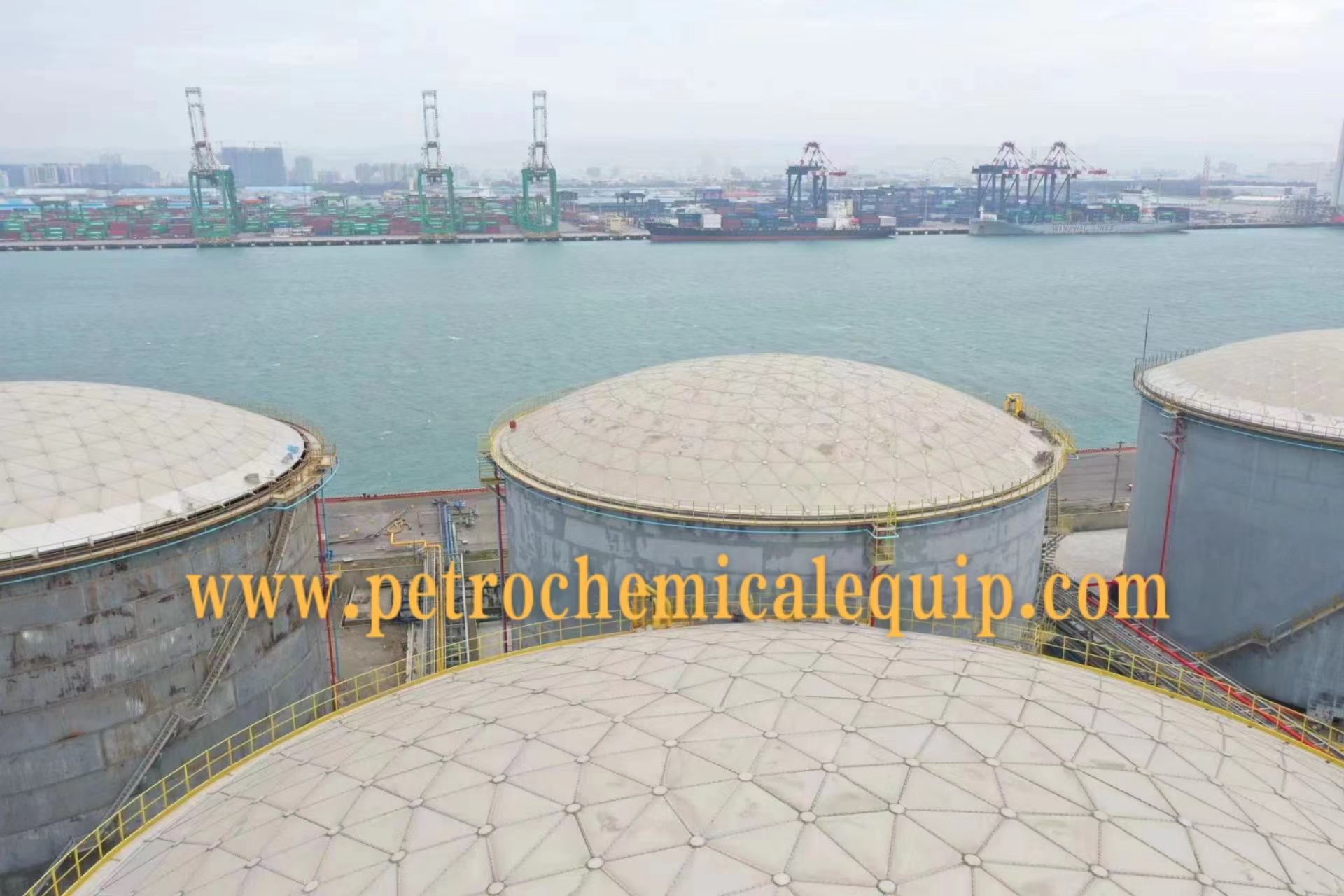
The Aluminum Geodesic Dome is a self-supporting cover used usually in refineries and tank farms, where the storage product and the structural tank components must be protected from atmospheric and environmental influences, while the same time, minimize hazardous vapour emissions and preventing water from entering the storage tanks. They can be used for both new tanks and retrofit projects.

The Aluminum Geodesic Dome is a self-supporting cover used usually in refineries and tank farms, where the storage product and the structural tank components must be protected from atmospheric and environmental influences, while the same time, minimize hazardous vapour emissions and preventing water from entering the storage tanks. They can be used for both new tanks and retrofit projects.

Aluminum Geodesic Domes are Corrosion resistance,clear span capacity,low-cost construction,Low maintenance cost,Design flexibility.
The company has independent property rights of standardized machining plant 5600 ㎡, covering an area of more than 10,000 ㎡
The existing high-tech special equipment more than 30 sets, the implementation of robot automatic welding, breakthrough industry cognition, fully ensure product quality and production efficiency.
The company has independent property rights of standardized machining plant 5600 ㎡, covering an area of more than 10,000 ㎡
The existing high-tech special equipment more than 30 sets, the implementation of robot automatic welding, breakthrough industry cognition, fully ensure product quality and production efficiency.
Why Geodesic Dome Roofs are the Ultimate Solution for Large-Span StorageLarge-span storage is a crucial requirement for various industries such as petrochemical, agriculture, and manufacturing. Traditional storage solutions often fail to meet the demands of expansive storage needs due to limitations
Sustainable Architecture: How Geodesic Domes Improve Energy Efficiency and Reduce Carbon FootprintsIn today’s world, sustainability has become a crucial factor in architectural design, particularly as we strive to reduce our environmental impact and adapt to changing climate conditions. Geodesic Dom
How Internal Floating Roofs Reduce VOC Emissions and Ensure API 650 ComplianceIn industries where petroleum, chemicals, and other volatile liquids are stored, controlling volatile organic compounds (VOCs) is crucial for reducing environmental pollution and adhering to strict regulations. VOCs are ha
Understanding Top Loading Arm Overfill Protection1. Introduction to Top Loading ArmsWhat is a Top Loading Arm?A Top Loading Arm is a specialized piece of equipment used in the industrial sectors, especially in petrochemical, oil, and chemical industries. It facilitates the safe and efficient transfe
Top Loading vs. Bottom Loading: Which System is Right for Your Terminal?When it comes to transporting liquids and gases, choosing the right loading system is essential for ensuring efficiency, safety, and cost-effectiveness at your terminal. Two of the most common loading methods are Top Loading and
Have you ever wondered how industries store liquids safely and efficiently? Glass Fused To Steel tanks offer an ideal solution. Combining the strength of steel with the corrosion-resistant properties of glass, these tanks are built to last.
When it comes to storing volatile liquids, Internal Floating Roofs (IFRs) play a pivotal role in minimizing evaporative losses and controlling harmful emissions.
When designing and selecting the right Internal Floating Roof (IFR) for storage tanks, it’s important to understand the core engineering principles that drive their functionality.
In the petrochemical, oil, and gas industries, Internal Floating Roofs (IFRs) play an essential role in reducing evaporative loss and minimizing harmful emissions from storage tanks.
In industries where volatile liquids like crude oil, chemicals, and petroleum products are stored, the Internal Floating Roof (IFR) plays a crucial role in ensuring product safety and regulatory compliance.
The Internal Floating Roof (IFR) is a critical component of storage tanks, especially for volatile liquids in industries like oil and gas, chemical processing, and petrochemicals.
When it comes to safely storing volatile liquids, the Internal Floating Roof (IFR) is an essential component. Its main purpose is to reduce evaporative loss and prevent harmful emissions by providing a barrier between the stored liquid and the atmosphere.
Reliable fire water storage is essential for effective fire protection. Glass Fused To Steel (GFS) Tanks offer a durable and corrosion-resistant solution, ensuring long-term water storage for fire suppression systems.This guide will explore how GFS tanks work, the benefits they offer, and how to select the best tank for your fire safety needs.
Have you ever wondered how to store water safely and efficiently in harsh environments? Glass-Fused-to-Steel (GFS) tanks offer a powerful solution.These tanks combine the strength of steel with the durability and corrosion resistance of glass. The result is a long-lasting, reliable storage solution ideal for both industrial and water storage needs.
Did you know that the quality of your tank depends not just on materials, but on the manufacturer? Glass Fused to Steel (GFS) tanks are essential for industrial and water storage, combining strength with corrosion resistance. However, choosing the right manufacturer can significantly affect the tank's durability and performance.
Glass Fused to Steel (GFS) tanks are known for their durability and resistance to corrosion. They are widely used across industries, from water treatment to chemical storage. However, without proper assembly and commissioning,these tanks may face issues that could affect their performance.
In industries that handle liquids, gases, or chemicals, the safe and efficient transfer of materials is a top priority.
In industries where liquids, gases, or chemicals are transferred every day, two main tools are often used: the loading arm and the flexible hose.
In industries such as oil and gas, chemicals, food processing, and shipping, transferring liquids or gases from one container to another is a daily necessity.
In the global trade of oil, gas, and chemicals, one of the most important pieces of equipment that ensures safe and efficient operations at ports is the marine loading arm. This highly engineered structure is designed to transfer liquids or gases between shore-based storage tanks and ships.